Introduction
This is the fifth post in a series where I will try to find what (to me) results in the best pint of Guinness. First up I plan to test different aerator discs. Eventually, I will test different faucets, pouring methods, and glassware.
Part of the process of pouring a nitrogen beer is pouring it through an aerator or creamer. This is a disc with holes punched through it that the beer is forced through. In theory, the size and number of the holes could have an impact on what ends up in your glass. To test this out I purchased a set of aerator discs. This test is comparing a disc with three 0.7mm holes to a disc with five 0.5 mm holes. The total surface are of the holes in the aerator is very similar. I am expecting these to be near indistinguishable.
Testing Method
- Each disc is installed on a different stout spout. This is just to make switching between pours easier. Other than the disc, the spouts should be the same.
- Before pouring a pint I will run off some beer. This should ensure that there are no variations in the temperature of the faucet between the first and second pour.
- I poured each Guinness by holding the beer close to the faucet at a about a 45 degree angle, aiming to hit the center of the harp. Beer was poured until it reached near the top of the glass (while being held at a 45 degree angle) then I set a timer for two minutes. When the timer went off I poured the beer straight down while pushing the tap handle forwards until beer reached near the top of the harp then pushed the handle backwards to top off.
- Once each beer was finished I let them rest for to let the temperature stabilize.
- I did my initial tasting without knowing which pour was which.
Comparison
My first pour was with the 0.7mm disc. On the coffee scale the flow rate shows about 15 grams per second. While holding the glass at an angle it took about 10 seconds for beer to reach the bottom of the harp and 15 seconds for beer to reach the top of the glass.


The second pour was with the disc that had five 0.5mm holes. Smaller holes but more of them. The flow rate and times were nearly identical. And the pour looks similar too:

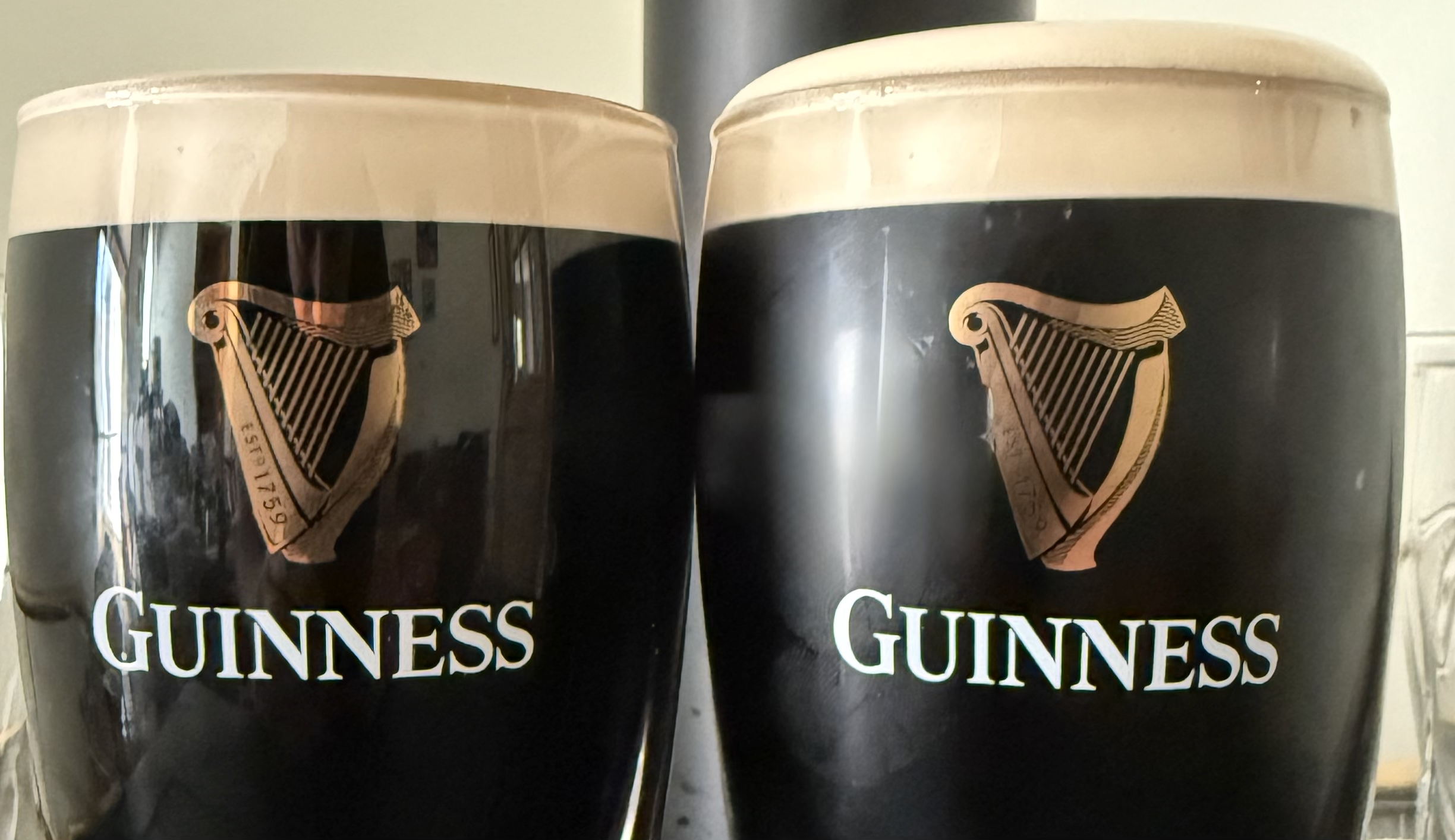
I forgot to take a picture of just the second pour after it was topped off. But here’s a photo of both. The 0.7mm disc on the left and 0.5mm disc on the right.

And the top down. To m eye the beer poured through the 0.5mm disc on the right looks smoother; but the bubbles in the beer on the left look denser:

Conclusions
As expected, these were the most similar two pours of all the disc comparisons that I’ve done. And this time I can’t use pour time as a tie breaker. I think the 0.7mm disc just edges out the 0.5 disc. The texture of the foam was just ever so slightly denser which led to a creamier impression on the mouthfeel. Here’s a top down photo after my first sip. Again with the 0.7mm disc on the left.

Around the 11:00 position of each glass is where I sipped the beer. You can see that the 0.7mm disc has a wider, shallower divot in the foam. Whereas the 0.5 mm disc has a little more of the dark color poking through. This could just be the way that I held the glass to my mouth but I do think that the texture of the foam is ever so slightly denser on the Guinness poured with the 0.7mm disc. So that’s what I’ll bring to the next test.
Next up will be the 3×0.7mm disc that has won every comparison so far against the disc with five 0.3mm holes. I’m curious to see how much slower that one pours. I’d be surprised if I preferred the pour but I’ll go in with an open mind.